Let me start with a confession:
Even as a professional interior designer, I can’t always tell you on the spot if two pieces will work together just by looking at them separately. A sofa on its own? Sure. A rug on its own? Beautiful. But together, with that wall color, next to that coffee table, under that light? That’s a whole other story.
And that’s exactly why moodboards are everything.
A moodboard is where ideas stop living in your head and finally become visual, real, and testable. Before you spend money. Before you commit. Before you regret a choice that looked great online but feels wrong in your space.
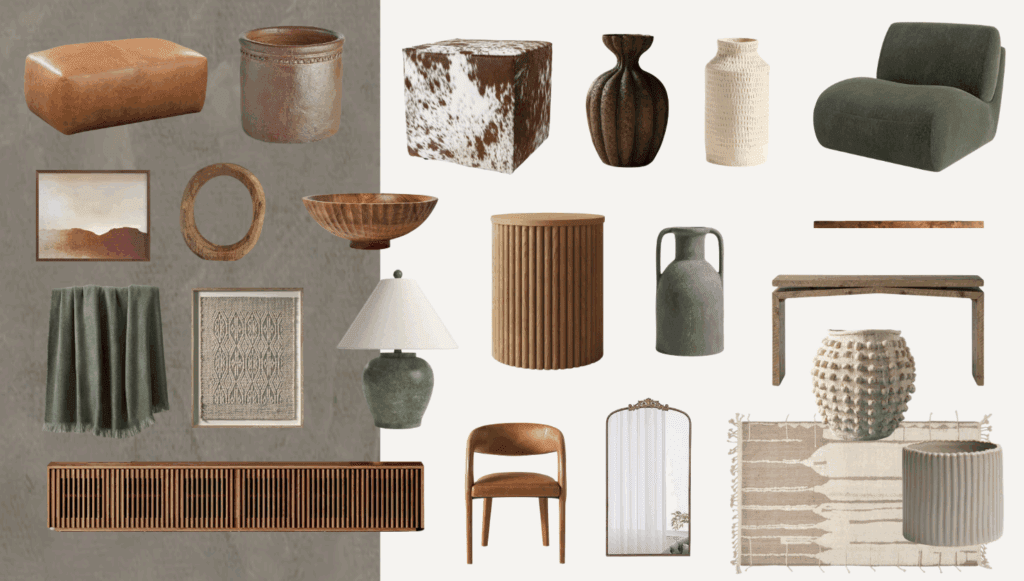
Why visualizing first changes everything
Your brain is amazing… but it’s not a 3D rendering machine. Most of the time, when you’re trying to imagine how a lamp, a sofa, a paint color, curtains, and wall art will work together, you’re guessing. And guessing is risky when furniture and decor are involved.
A moodboard lets you:
- See everything side by side
- Test combinations before spending a single dollar
- Spot clashes in color, scale, or style immediately
- Build a real direction instead of buying piece by piece randomly
When you pair furniture, wall treatments, curtains, lighting, art, and accessories on the same visual board, something magical happens: your project suddenly makes sense. You’re no longer shopping blindly — you’re designing with intention.
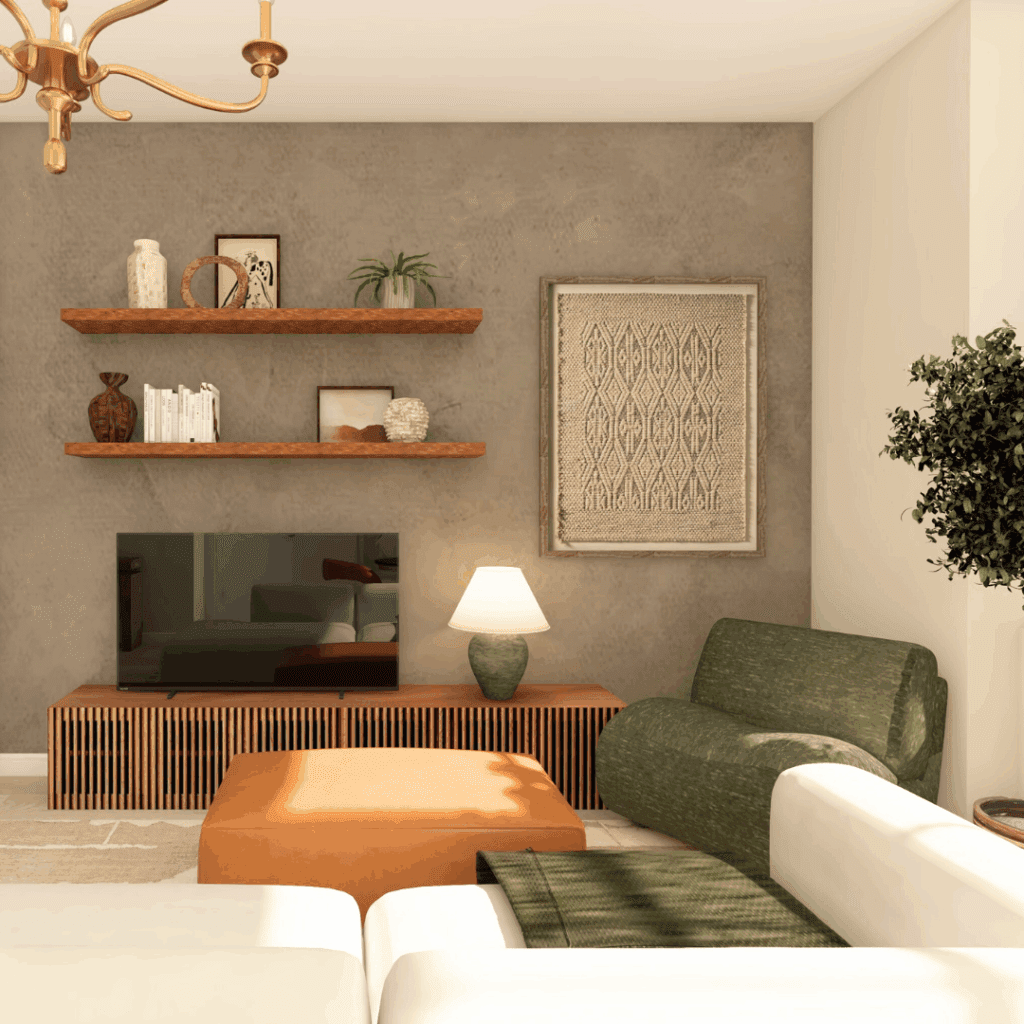
What is a moodboard in interior design?
In interior design, a moodboard is like a blank visual canvas where you upload photos of furniture, decor, materials, colors, lighting, and accessories to see how everything works together. Unlike a Pinterest board, which is mostly about collecting images you like, a moodboard is about testing real, concrete items you might actually buy later. You’re no longer just dreaming — you’re pairing, adjusting, comparing, and building a space on purpose before committing.
Even designers rely on moodboards (all the time)
People often think designers just “know” if things work together. Yes… and no.
We have experience. We have instincts. But we still test. We still compare. We still move things around visually. Because design is not about individual beautiful objects — it’s about how everything interacts together.
When I’m working on a project, I’ll often try:
- Two different sofas with the same rug
- The same sofa with three wall colors
- Different lighting styles with the same furniture base
And I don’t do this in my head. I do it with moodboards.
It’s faster. It’s clearer. And it saves my clients from expensive mistakes.
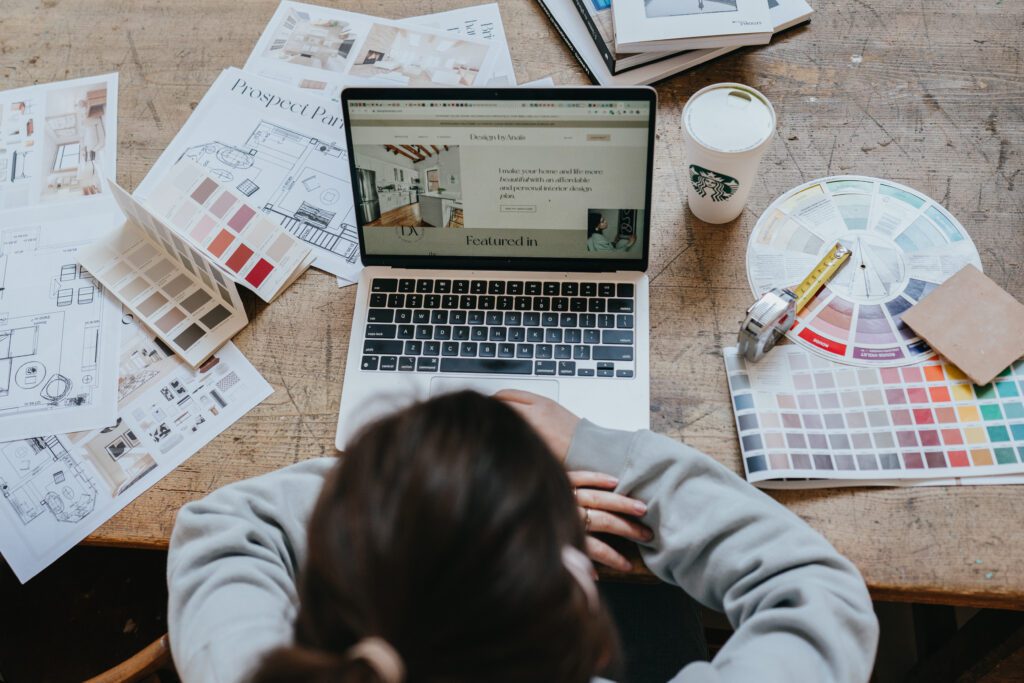
A moodboard is your best anti-impulse-buy tool
We’ve all been there:
You fall in love with a chair.
You order it.
It arrives.
And suddenly… it doesn’t belong anywhere.
Moodboards slow you down in the best way. They force you to ask:
- Does this piece match the rest of my space?
- Does it fit the vibe I’m actually going for?
- Is it too bold, too cold, too heavy, too trendy?
Instead of reacting emotionally to every pretty object, you’re intentionally building a coherent universe for your home.
How to build a moodboard (without overcomplicating it)
You don’t need fancy software or design training to build a good moodboard. You mainly need a bit of honesty, curiosity, and structure. Here are a few easy rules I always follow — and that I recommend to my clients:
1. Start with what you already own
Take photos of the furniture, rugs, or decor pieces you love and want to keep. Add them to your moodboard first. This creates your real starting point instead of designing in a fantasy vacuum.
2. Choose a direction before choosing products
Don’t start with “I need a sofa.”
Start with “I want my space to feel warm,” or “calm,” or “bold,” or “soft,” or “minimal but cozy.” Your moodboard should express a feeling, not just a shopping list.
3. Don’t aim for perfection on the first try
Your moodboard is a testing ground. You’re allowed to change your mind. Remove things. Replace things. That’s the whole point.
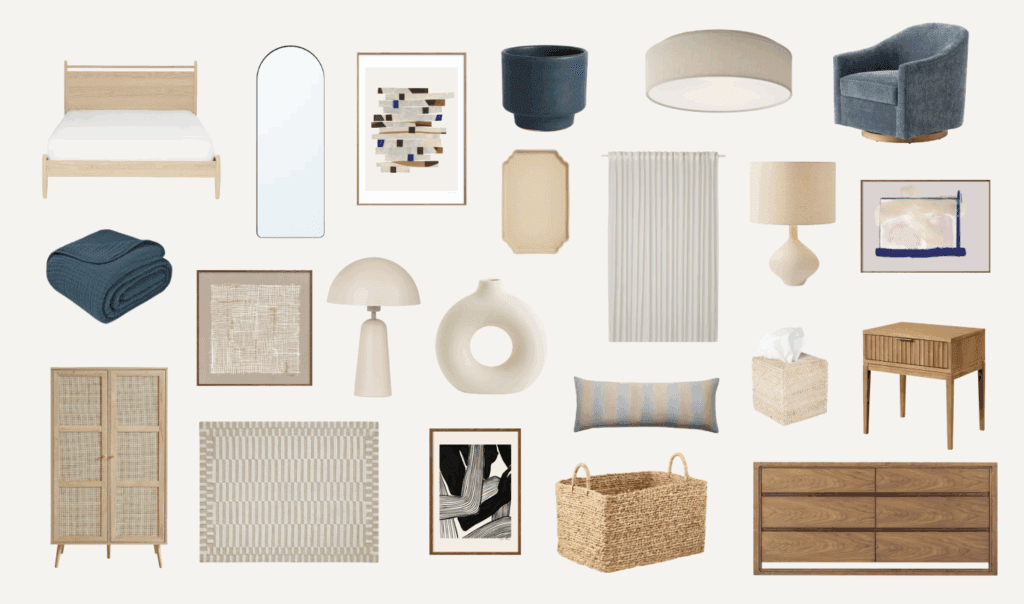
The 3 tools I recommend to build your moodboards
There are many tools out there, but these three are the ones I truly find the most useful and accessible — whether you’re a design pro or just redesigning your own home.
🎨 Canva
Canva is perfect when you want to turn your ideas into a clean, finished-looking moodboard. You can start fully from scratch, upload your own furniture photos, inspiration images, textures, and colors, and arrange everything exactly how you want. It’s ideal when your vision is already pretty clear and you want to see it come together in one strong visual that’s easy to save, share, or keep open while shopping.
Downside (for decor moodboards):
One of the best features for moodboards — the background remover — isn’t available in the free version. And that’s a big one when you want to isolate furniture pieces cleanly.
🧠 Milanote
Milanote is your creative playground. This is where you explore before you decide. You can freely drop furniture photos, textures, lighting ideas, color swatches, and inspiration images onto a big open canvas, move everything around, group ideas, compare options, and write little notes. It really mirrors the early design phase, when you’re still figuring out the mood — not the final look.
Downside (for decor moodboards):
The free version limits how many elements you can add, so very large or very detailed boards can feel a bit restricted.
🏡 Planner 5D
Planner 5D is amazing when you want to go one step further and see your ideas inside an actual space. It’s perfect for testing furniture size, layout, circulation, and balance once your moodboard direction is defined. It helps bridge the gap between inspiration and reality.
Downside (for decor moodboards):
It’s more about layout than pure creativity. If you only want a loose collage of moods and materials, it can feel a bit heavy.

Moodboards = Confidence, not hesitation
At the end of the day, a moodboard isn’t about controlling your creativity. It’s about supporting it. It gives you confidence in your choices. It helps you commit without fear. And it turns “I hope this works” into “I know this works.”
Your home deserves that level of care.
And honestly? So does your budget.
If there’s one habit you take away from this article, let it be this:
Never buy anything important for your home without seeing it in a moodboard first.
Your future self will thank you 🙏

About me
Hi, it's me, Anaïs, the founder of Design by Anaïs.
I'm a French interior designer, based in Brooklyn, NY, and designing all over the US.
I'm on a mission to make interior design accessible to everyone!
Want to chat about your project? Contact me today!
Want to read more content from me?
You can find me on Instagram, Linkedin, Medium, Pinterest and Yelp!